
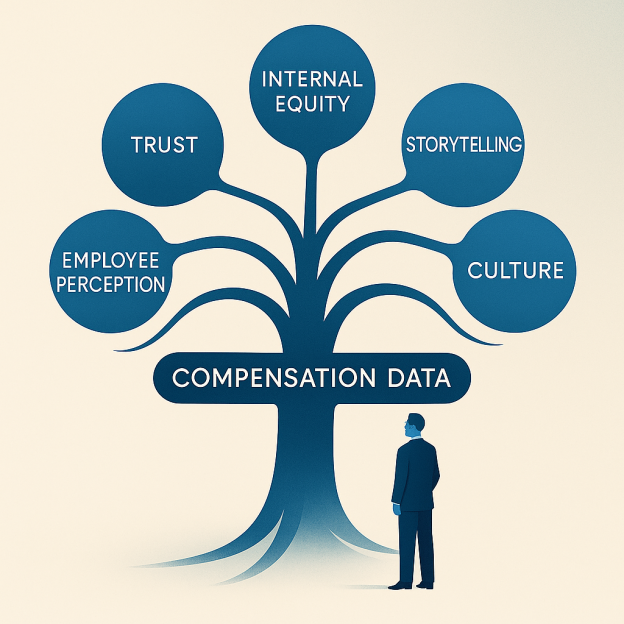
When you work in compensation, numbers are your best friend. They allow you to benchmark roles, justify decisions, model scenarios, and communicate value to leadership. But as any seasoned compensation professional will tell you, numbers also have limits. While data can illuminate trends, it won’t make judgment calls for you. It can guide your decisions, but it can’t always explain why something works or doesn’t work.
That’s why one of the most important lessons for anyone in the compensation field is to always remember that data is a tool, not a crutch.
Let’s take a moment to explore the boundaries of compensation data, the risks of relying on it too heavily, and what to consider when making pay decisions that go beyond the spreadsheet.
The Power and Limits of Compensation Data
Let’s start with the obvious: compensation data is critical. Whether you’re pulling market pricing from salary surveys, analyzing pay equity metrics, or modeling the impact of a new bonus structure, data helps you make informed decisions. It gives you a benchmark, a reference point, and a guardrail.
But here’s what compensation data can’t tell you:
- It can’t explain internal dynamics.
- It can’t account for messy org charts.
- It doesn’t always reflect your industry’s nuances.
- It can’t predict how employees will feel.
And most importantly, it can’t make the tough calls for you.
What Data Doesn’t Show: 5 Blind Spots to Watch For
- Internal Equity vs. Market Reality
Compensation data might tell you a role pays $120,000 in the market, but if you have three people doing similar work at $95,000 internally, matching the market could cause serious disruption.
This is the balancing act between external competitiveness and internal equity – and data alone doesn’t resolve it. It takes strategic thinking to weigh what matters most for your organization: attraction, retention, morale, and fairness.
- The Real Scope of a Role
Job titles can be very deceiving. A “Manager” in one company may oversee 50 people and a $10M budget, and manage no one at all in another.
Compensation data benchmarks jobs based on job content, not titles – and job content can vary. When you’re market pricing a role, you need to know the true responsibilities, decision-making authority, and business impact without relying too much on the title.
This is where human judgment comes in. You need to interpret the data based on context.
- The Intangibles of Pay Strategy
Data can show you how much a role pays, but it can’t tell you how your compensation strategy aligns with your values. Do you lead or lag the market? Do you prioritize variable pay? Are you trying to drive performance, or create stability?
These are philosophical questions that reflect your company’s culture, brand, and goals, and they can’t be answered by a fancy spreadsheet.
- Employee Perception
Even the most rational pay decision can feel “unfair” if they aren’t communicated properly.
Employees experience pay through emotion, not data. If someone feels underpaid compared to a peer or believes the company isn’t being transparent, that perception can hurt engagement regardless of what the market says.
Data can justify decisions, but it can’t build trust. That takes storytelling, empathy, and clear communication.
- Future Readiness
By nature, compensation data is backward-looking – it tells you what the market paid last year or last quarter. But in fast-moving industries like tech, your biggest hiring needs might be for roles that barely existed two years ago.
To stay ahead, you need to combine data with foresight. What skills are gaining value? What trends are reshaping your industry? And how do you build pay structures that are agile enough to evolve?
This kind of thinking goes beyond the numbers.
Why Over-Relying on Data Is Risky
Here’s what can happen when compensation professionals lean too hard on data:
- Inflexible policies: Rigid adherence to pay bands or survey results can block smart exceptions.
- Equity gaps: Data can reinforce existing disparities if you’re not actively auditing and adjusting.
- Missed talent: You may underpay or overlook high-potential candidates because they don’t fit into your pricing model.
- Damaged trust.: Overly technical explanations for pay decisions can alienate employees and erode culture.
Ultimately, data is only as good as the strategy behind it. Without a thoughtful approach, even the best data can lead to poor outcomes.
What to Do Instead: 5 Strategies to Think Beyond the Data
- Build Compensation Principles First
Before diving into surveys, define your compensation philosophy. What do you believe about pay? What behaviors do you want to reward? Are you more focused on attracting top talent or retaining existing employees?
Once you have clear principles, your use of data becomes more intentional, and far more effective.
- Pair Data with Storytelling
Use data to inform your decisions, but use narrative to explain them. When employees understand the real reasons behind a pay range or promotion decision, they’re more likely to trust the outcome.
Train managers to have these conversations – don’t let data do all the talking.
- Use Multiple Sources
Relying on a single salary survey can limit your perspective. Try triangulating data from multiple sources like surveys, internal data, recruiter insights, and industry reports to get a more complete view.
Think of it like cross-checking. The more context you have, the better your decisions will be.
- Evaluate Skills, Not Just Roles
As roles become more fluid, skills-based compensation becomes more relevant. Ask yourself:
- What skills are critical to our business right now?
- Are we paying a premium for those?
- Are we developing them internally?
Skills-based pay frameworks allow for much more precision and agility.
- Stay Curious
Numbers might tell you what’s happening, but curiosity tells you why.
Ask questions when something looks off, dig deeper when the data doesn’t match your instincts, and always keep learning from peers, trends, and your own organization.
Compensation is a data-driven field – but the best compensation professionals aren’t just spreadsheet masters, they’re strategic thinkers, communicators, and problem-solvers. They know how to interpret the numbers, and when to look past them.
At the Compensation Analyst Academy, we help you develop both sides of the equation: analytical skills and strategic thinking. Because in this field, success doesn’t come from what the data says, but what you do with it.
Interested in improving your compensation skills? We just added a new CAA training course starting August 5 to help you gain the knowledge, tools, and real-world perspective to think and act beyond the data – all while earning a career-boosting certification in just three days without taking an exam. Register here.