Author Archives: Dan Weaver

The Pay-Potential Problem

“Potential” is a word that’s always been favorable in the workplace, suggesting future growth and possibility. On the other hand, it’s one of the most complicated concepts within the world of compensation.

Paying for potential can appear to make a lot of sense at first glance, like when a supervisor observes a highly talented and eager person on their team. Naturally, the organization will want to retain them before someone else snatches them up, making a preemptive salary increase or promotion seem like a smart future investment.

The major dilemma here is that as we will discuss, compensation adjustments don’t usually work out unless they are firmly grounded in the present.

Potential Does Not Equal Performance

As compensation professionals are acutely aware, pay structures must always account for job scope, market value, internal equity, skills, experience, and performance. These are all objective, measurable details. Potential, however, is completely subjective information – something that does not mix well with compensation.

With that said, potential doesn’t need to be ignored, but it should be dealt with delicately. When potential does happen to become such a large factor that it must be considered, it doesn’t take long for fairness concerns to come out of the woodwork. You could easily find yourself facing a situation where one worker gets a larger raise because management views them as “on the way up,” while someone else currently performing at a higher level receives less because they are seen as a steadier asset with little room for growth.

From an objective standpoint, this could never be seen as fair and sends the wrong message to employees.

The Risk of Subjective Pay

As stated previously, paying for potential is a highly subjective concept that is often influenced by supervisor preferences or familiarity biases. Walking the walk may mean much more than talking the talk, but even so, those who express their ambitions often may give off the illusion of having more potential, when in reality they are all talk with no results. Meanwhile, more modest employees who do superior work might be passed over if they don’t immediately present themselves as an effective leader.

These are the scenarios in which the compensation team needs to act by focusing more on what the company is truly trying to invest in. Important considerations include whether the employee is currently operating at a high level, if there have been major changes in scope or the job itself, how valuable their skills are, what the retention concerns might be, and factoring in concerns regarding the adjustment being temporary vs. long-term or related to a promotion.

Recognizing Potential the Right Way

If you want to recognize potential in a fair and effective manner, the key is to align that potential with a solid plan. For an employee to be considered prepared for greater responsibilities, there needs to be a clear definition of what that preparation entails. This outline should include their exact proven capabilities, an understanding of what duties will be added, a practical timeline, and a determination of the compensation adjustments that will be made once these goals are reached.

The benefit here is that it elevates the discussion from simple commendation to something more tangible and motivating. In addition to the knowledge that management believes their career has a bright future, the employee will also have a much better grasp on what they need to do in order to transform that potential into a promotion or a raise.

The Compensation Behind the Curtain

Compensation is never vague; it always needs to be defined with clarity. While every little thing doesn’t necessarily need to be scrutinized, the reasoning should be strong enough to support pay decisions.

In situations where these choices depend on hazy guesses regarding possible outcomes, endorsing them in good faith becomes nearly impossible. However, once they’re connected to measurable details like abilities, scope, achievements, compensation data, and proven progress, they can truly have a leg to stand on.

If you enjoyed this blog post, feel free to:

Follow me on LinkedIn

Follow the Compensation Analyst Academy on LinkedIn

Follow the Compensation & HR Group on LinkedIn

The Compensation Questions Everyone Thinks – But Rarely Asks

Compensation conversations often sound confident on the surface, especially when market data is cited, ranges are referenced, and decisions are framed as “aligned” or “competitive.”

But beneath that confidence, many compensation professionals are likely burdened with questions they hesitate to ask out loud. Even though they’re important questions, asking them can feel risky as inquiring about pay decisions can feel like exposing uncertainty itself.

Here are some of the most common compensation questions people quietly wrestle with, and why they deserve more attention.

“Do we actually trust this market data?”

Salary surveys play a central role in many compensation decisions, yet few professionals feel comfortable questioning how well the data actually applies.

Pertinent considerations would include whether the sample size is meaningful, the jobs are truly comparable, and if a particular survey is being leaned on because it’s familiar rather than accurate.

These questions go beyond technical methodology and influence real pay decisions. When data is accepted without scrutiny, small mismatches compound over time and can negatively affect ranges, offers, and internal equity in ways that are difficult to fix later.

“Are we being fair, or just consistent?”

Consistency may be easy to measure, but fairness is not.

Organizations typically default to uniform rules because they’re defensible, even when they produce outcomes that feel misaligned with responsibility, impact, or market conditions. The question many professionals carry is whether thoughtful judgment is being sacrificed for the more straigtforward method of simply applying the same treatment each time.

When fairness goes unexamined, employees may comply, but they don’t always trust the system. Over time, that gap shows up in disengagement, skepticism, and repeated challenges to pay decisions that technically follow the rules.

“Why does this role price higher than that one?”

Job evaluation logic can look perfectly sound on paper, but feel unclear in practice. Two roles may require similar education and experience, yet land far apart in market value.

This does not go unnoticed but tends to go unasked by compensation employees. Sometimes because of fear the explanation won’t hold up, other times due to lack of confidence they could explain it themselves.

When pricing logic can’t be articulated clearly, it weakens credibility across the organization with both employees and the managers who are expected to reinforce those decisions.

“Are we reacting or deciding?”

Pay decisions often happen under high-pressure situations like a resignation threat, a hiring deadline, or a retention concern.

The unspoken question is whether these choices are grounded in a coherent structure or driven by urgency and precedent. Many professionals sense when compensation starts feeling reactive but hesitate to name it.

The major risk here is that exceptions can quietly become policy. Decisions made to solve immediate problems can change pay structures long after the original context is forgotten.

“How do I communicate this to employees effectively?”

Even when a pay decision is logical, explaining it can feel uncomfortable. The reasoning may be solid, yet translating it into clear, credible language is where many professionals hesitate.

How much context should be shared? Which details clarify the decision, and which complicate it? What do you say when an employee disagrees with the outcome?

When communication falls short, the tendency is for employees to assume the decision was unfair as opposed to concluding it was a complex issue. And once that assumption takes hold, even well-supported decisions become harder to defend.

Why These Questions Go Unasked

These inquiries aren’t asked because compensation sits at the intersection of money, trust, and authority. Pay is a sensitive topic and admitting uncertainty can feel like inviting doubt, especially in environments where compensation decisions are expected to be definitive.

It is important to note, however, that silence does not eliminate risk. It only serves to push it further downstream, where misunderstandings and misalignment are much harder to correct.

Where Clarity Comes From

Experience helps, but won’t resolve these questions alone. In many cases, it reinforces habits without explaining the logic behind them.

Clarity comes from understanding how compensation pieces connect, like how job evaluation, market pricing, structure, and communication reinforce one another. That understanding is what allows compensation professionals to stop avoiding difficult questions and start answering them with confidence.

For professionals looking to strengthen that clarity early in the year, the upcoming Compensation Analyst Academy sessions beginning January 20 and February 24 are designed to address these exact challenges with practical guidance and real-world context. Learn more and register here.

Mastering Job Evaluation: A Practical Guide for Compensation Analysts

Job evaluation is one of the foundational skills every compensation analyst must master. Too often, however, new analysts learn it on the fly with little formal training. You could be writing your first job description, slotting a role into an existing structure, or helping redesign pay grades – and in all these scenarios, understanding job evaluation is essential for getting it right while building fair, competitive, and defensible pay practices.

This practical guide breaks down what job evaluation really means, the methods you’ll see most often, and how you can develop sharper, more reliable evaluation skills.

What Is Job Evaluation?

Job evaluation is the process of systematically analyzing a job to determine its relative worth within an organization. This goes beyond the person in the role, focusing more on the responsibilities, skills, effort, and working conditions the job demands.

Good job evaluation helps guarantee that similar roles are paid closely and that pay differentials between jobs are justified. It’s the backbone of sound pay structures and pay equity.

Common Job Evaluation Methods

Most organizations use one or a combination of these basic approaches:

1. Ranking
Jobs are compared to one another and ranked from highest to lowest in terms of value to the organization. This method works best for small companies with less jobs.

2. Classification/Grading
Jobs are slotted into predefined grades or classes based on general descriptions. For example, all administrative jobs with similar duties might fall into the same grade.

3. Point Factor
This method assigns numerical values to compensable factors like skills, effort, responsibility, and working conditions, with the total points determining the job’s place in the hierarchy. This is a detailed and defensible practice widely used in larger organizations.

4. Factor Comparison
A more complex method that combines ranking and point factor approaches. This isn’t as common but is still used in some organizations with legacy systems that maintain older evaluation methods.

The Role of the Compensation Analyst

As an analyst, you may not be the final decision-maker for job evaluation outcomes, but you play a crucial role in gathering, analyzing, and presenting the information that drives these decisions.

Your responsibilities often include:

  • Reviewing job descriptions for clarity and accuracy
  • Analyzing market data and internal comparisons
  • Matching roles to survey data correctly
  • Using the chosen method (often point factor) to assign values
  • Writing rationales that explain how you reached your conclusions

Tips to Improve Your Job Evaluation Skills

1. Get the Job Description Right
A job evaluation is only as good as the information it’s based on. Always start with a clear, up-to-date job description that focuses on more on what the job does, not necessarily who does it.

2. Ask Clarifying Questions
Talk to managers or incumbents if descriptions are vague. Dig deeper to understand scope, responsibilities, and any unique aspects that might affect level.

3. Use Market Data Thoughtfully
Benchmarking and job evaluation are closely connected. Make sure you’re matching jobs accurately to survey data as low-quality matches lead to low-quality evaluations.

4. Be Consistent
Apply your chosen method across all roles. If you’re using a point factor system, stick to it as consistency builds trust in your work.

5. Document Everything
Keep clear notes on how you evaluated the job, especially if it’s borderline between levels. This documentation is invaluable if your decisions are ever questioned.

6. Keep Learning
Job content evolves, and so do evaluation methods. Stay sharp by reviewing cases, learning from experienced peers, and practicing your skills on a variety of roles.

The Value of Doing It Right

Strong job evaluation practices help organizations:

  • Maintain pay equity and comply with laws
  • Manage pay budgets effectively
  • Support transparent pay structures
  • Build trust with employees and leaders

For compensation analysts, mastering job evaluation is a vital career asset as it sets you apart as someone who understands the foundations of fair pay. It also shows that you can translate complex job content into clear, actionable data.

Keep Building Your Skills

Job evaluation is an important part of compensation work where your analytical skills can really shine while you make a lasting impact on your organization’s pay practices.

If you’re ready to take your evaluation skills to the next level, keep practicing, keep asking questions, and stay curious.

To get more tips on job evaluation and other compensation practices while earning a career-boosting certification in record time (no exam required), check out the upcoming Compensation Analyst Academy training programs in August and September designed to give you practical, real-world tools that make you a stronger, more confident compensation professional.

Compensation Terms All Analysts Should Know

The world of compensation comes with its own language, and mastering it is essential to building your credibility and confidence. Whether you’re preparing for your first comp analyst role or brushing up on your knowledge, this glossary of key terms will help you speak the language fluently.

Below, we define common compensation terms and pair each with real-world examples so you can see how they apply in practice.

Compa-Ratio

Definition: The ratio of an employee’s current salary to the midpoint of their salary range.

Formula: Current Salary / Salary Range Midpoint

Example: If an employee earns $75,000 and the midpoint of their range is $80,000, their compa-ratio is 93.75%. This suggests they’re paid below midpoint, which could prompt a market adjustment discussion.

Range Penetration

Definition: Measures how far an employee’s pay has progressed through their salary range.

Formula: (Salary – Range Minimum) / (Range Maximum – Range Minimum)

Example: If the range is $60,000–$90,000 and the employee makes $75,000, their range penetration is 50%. That indicates they’re midway through the band.

Midpoint Progression

Definition: The percentage increase between the midpoints of successive pay grades.

Formula: (New Grade Midpoint – Current Grade Midpoint) / Current Grade Midpoint

Example: If Grade 6 has a midpoint of $80,000 and Grade 7 has a midpoint of $88,000, the midpoint progression is 10%. This helps maintain clear differentiation between levels.

Pay Grade / Salary Grade

Definition: A level within an organization’s compensation structure that groups jobs of similar value.

Example: A Compensation Analyst might be in Pay Grade 6, while a Senior Compensation Analyst is in Pay Grade 8, reflecting differences in responsibility and pay range.

Job Slotting

Definition: The process of placing a job into the existing pay structure based on internal comparisons, not just market data.

Example: If you create a new Recruiting Operations Coordinator role, you might slot it between a Recruiting Assistant and a Recruiter based on job scope, even without direct market data.

Benchmark Job

    Definition: A well-understood, stable job commonly found in the market and used for comparison when pricing roles.

    Example: An Accountant II is typically a benchmark job, so you can easily find reliable survey data for pricing it.

    Pay Range / Salary Range

    Definition: The span from minimum to maximum pay for a particular grade or job. Usually includes a minimum, midpoint, and maximum.

    Example: A range for a Grade 6 job might be $70,000–$90,000 with a midpoint of $80,000. Offers are usually made between the minimum and midpoint for new hires.

    Red-Circled Pay

    Definition: When an employee’s pay is above the maximum of their range. This can happen due to past promotions, reclassification, or structural changes that placed the employee above range but without reducing their pay.

    Example: An engineer earning $125,000 in a role where the max is $120,000 is red-circled. They might be ineligible for increases until the range is adjusted or they take on a new role.

    Green-Circled Pay

    Definition: When an employee’s pay is below the minimum of the range – usually a red flag.

    Example: If a new hire is making $55,000 but the range minimum is $60,000, you’ll want to investigate whether that’s appropriate or if an adjustment is needed.

    Market Pricing

    Definition: The process of using external compensation data to determine competitive pay levels for a job.

    Example: When pricing a new Data Analyst role, you might pull data from a survey source like the CHRG Compensation Survey, match the job, and use the 50th percentile (market median) to set a target salary.

      Using This Knowledge in the Real World

      These terms are way more than just textbook jargon; they’re real tools that can help you make smarter decisions. Understanding them helps compensation analysts evaluate pay levels, explain data clearly to stakeholders, and build systems that support equity and growth. The more well-versed you are in this language, the more confident and effective you’ll be in your role.

      Want to learn even more practical compensation knowledge while earning a career-boosting certification in the process?

      Our next two exam-free Compensation Analyst Academy sessions are enrolling now:

      • August 5–7 (3-day intensive format)
      • September 9–19 (2-week extended format)

      Both options are virtual, led by an experienced instructor, and contain the same training and certification – just pick the schedule that works best for you.

      Click here to learn more and reserve your seat today.

      The Value of a Strong Network in Compensation

      Compensation is a data-driven discipline, but it’s also a people-focused one. And while survey results, pay structures, and analytic tools are essential, they don’t always provide the insight needed to navigate real-world complexity. For many of the most difficult questions in compensation, the most valuable resource isn’t a dataset, but a well-developed professional network.

      No matter how experienced you are, there will always be moments when you need to talk through an approach, compare practices, or understand how others are handling a new challenge. Having trusted peers to reach out to can help you pressure-test ideas, avoid blind spots, and stay sharp in a quickly-changing field.

      Why Networking is Important

      Unlike other disciplines, compensation often requires making decisions when the data is ambiguous or incomplete. Survey matches may be imperfect, titles may vary across companies, and the “right” answer may depend more on context than benchmarks. When that happens, your network becomes more than just a source of support, but perspective as well.

      Professionals who are regularly in touch with others in the field are better equipped to:

      • Stay current on how peers are interpreting new regulations or trends
      • Learn what’s working (or not working) in different organizational settings
      • Understand how compensation strategy is shifting in practice, not just in theory
      • Move faster when unexpected challenges arise

      In short, a strong network improves both the quality and the confidence of your decisions.

      Building a Meaningful Network

      Many compensation professionals don’t actively build their network until they need one. The good news is it doesn’t take a massive effort or constant engagement – small, intentional steps can lead to meaningful connections over time. Here are a few good ways to get started:

      • Join industry conversations. Participate in LinkedIn groups or online communities focused on compensation and HR. Add to discussions or ask thoughtful questions to make yourself visible.
      • Attend training programs that encourage peer interaction. Peer-based learning environments are especially helpful because they create opportunities for productive conversations, not just content consumption.
      • Follow credible organizations and thought leaders. Pages like the Compensation Analyst Academy regularly post content that sparks discussion among professionals. Following and engaging with these posts helps you stay informed, and helps others find you too.
      • Be generous with your own knowledge. Offering guidance, sharing lessons learned, or pointing someone to a resource builds goodwill and credibility which strengthens your network long-term.

      Training as a Networking Opportunity

      One of the lesser-known benefits of structured compensation training is having access to a built-in peer group. In programs like the Compensation Analyst Academy, participants aren’t just there to learn from an instructor, they’re learning from each other too. The live, discussion-based format encourages real-time problem solving, experience sharing, and connection. And because participants come from a range of industries and roles, the insights go beyond any single organization’s way of doing things.

      Past attendees frequently stay in touch, forming informal networks that continue to provide value throughout their careers. The result is a dual benefit: new skills and new relationships, both of which serve you long after the training ends.

      If you’re looking to grow your network while sharpening your skills, there are two upcoming CAA classes offering that opportunity:

      • August 5–7 (3-day intensive format)
      • September 9–19 (2-week format)

      Learn more and register here.

      Stay Connected and Effective

      Compensation is rarely black and white, and while tools, data, and frameworks are necessary, they’re not always sufficient. Peer conversations often surface the real-world nuance that policies and systems can’t capture – they help you see how others are approaching the same work in different settings with different constraints. That kind of visibility strengthens your judgment and broadens your thinking.

      Whether you’re new to the field or a seasoned comp pro, investing time in your professional network is one of the smartest moves you can make. It doesn’t require constant outreach or endless meetings, just consistency, curiosity, and a willingness to engage.

      Market Pricing Myths: When Pay Fiction and Reality Collide

      Market pricing is one of the most foundational practices in compensation, but it’s also one of the most misunderstood. For many organizations, market pricing is treated as an exact science – punch in a job title, get a number. But as every seasoned compensation analyst knows, the reality is far more nuanced.

      Behind the spreadsheets and survey data lie a host of persistent myths that distort how compensation decisions are made. If gone unchecked, these myths can become liabilities that lead to costly mistakes, equity issues, and missed opportunities for strategic alignment.

      Myth 1: The job title tells you everything.
      Reality: Titles are inconsistent, inflated, and often misleading.

      One of the most common traps in market pricing is assuming that a job title alone is a reliable indicator of market value – but job titles vary wildly across industries and companies. A “Marketing Manager” at one company could be a senior-level strategist, while at another, it’s an early-career generalist.

      That’s why accurate market pricing requires a detailed analysis of job content, not just the title. Look at the responsibilities, decision-making authority, reporting relationships, and required skills. Only then can you match the role to the right survey benchmark.

      Myth 2: The market rate is the right rate.
      Reality: The market rate is just a reference point, not a mandate.

      Market data is essential, but it’s not the final answer. A market median or 50th percentile can serve as a helpful anchor, but your organization’s compensation philosophy, talent strategy, and financial position should all influence actual pay decisions.

      High-demand skills, limited talent pools, or rapid business growth may justify paying above market. Conversely, stable roles with long tenure might sit below it. The point is, “market rate” is not synonymous with “fair pay” – and treating it that way ignores the context that gives compensation meaning.

      Myth 3: Market data is always objective.
      Reality: Data sources carry bias and limitations.

      Many compensation professionals assume that survey data is objective, neutral, and comprehensive. But in truth, every dataset has limitations. Some are based on self-reported data, others rely on employer-submitted inputs. Some skew toward large companies, others toward specific industries.

      Even reputable data sources can introduce noise. Sample sizes may be small for niche roles, geographic differentials may be outdated, and leveling inconsistencies may distort benchmarks. It’s critical to understand how each dataset was built, and to use multiple sources when possible.

      Myth 4: External data is all you need.
      Reality: Internal equity is just as important.

      Focusing only on external market data risks creating internal equity issues. You might offer a new hire a competitive market rate, but if it significantly exceeds what current employees earn for similar work, you’ve just planted the seed for pay dissatisfaction.

      A strong compensation strategy balances external competitiveness with internal fairness. That means layering market data with internal comp ratios, pay ranges, performance ratings, and career progression paths. Market pricing is a key input, but not the whole equation.

      Myth 5: All jobs can be market priced.
      Reality: Some roles don’t have clean market matches.

      For highly specialized, hybrid, or newly emerging roles, you won’t always find a perfect benchmark in survey data. Attempting to force a fit often leads to distorted pricing that misrepresents the role’s true value.

      In these cases, it’s better to deconstruct the role into core components. For example, a “Data Product Manager” might combine elements of data science, UX, and product ownership. Pricing each element separately and weighing their relevance can yield a more informed estimate.

      Myth 6: Market pricing is a one-and-done exercise.
      Reality: It’s a living process.

      Compensation teams sometimes treat market pricing as an annual exercise where they pull data, update ranges, and then move on – but labor markets are increasingly dynamic. Hot skills can spike in value in a matter of months, geographic differentials can shift with remote work, and M&A activity can destabilize pay norms.

      That’s why it’s important to continuously monitor the market, not just at year-end. Regular pulse checks, recruiter feedback, and candidate negotiations all offer signals that your pricing may need to shift.

      Myth 7: Survey medians reflect what companies are actually paying.
      Reality: They often reflect what companies say they pay.

      There’s a gap between published pay ranges and real-world compensation practices. Some companies underreport, others overstate, and many interpret “base pay” and “total comp” differently. Plus, survey data tends to lag – capturing where pay was, not where it’s going.

      Compensation professionals must account for this. Look for trends across surveys, validate against current offers, and don’t assume the median represents the full truth. The story is always more complex than a single number suggests.

      Myth 8: Pay ranges based on market data ensure equity.
      Reality: How you use the data determines the outcome.

      Even when pay ranges are built with good market data, equity isn’t guaranteed. Managers may have too much discretion, starting salaries may creep higher with each new hire, and performance increases may be uneven.

      That’s why implementation matters as much as design. Build guardrails, audit exceptions, track trends, and educate managers on pay decisions. Data-informed structures only work if consistently applied.

      Bringing It All Together: From Data to Strategy

      Market pricing is an essential tool, but it’s not the destination – it’s a starting point for strategic decisions about pay, and like any tool, its value depends on how it’s used.

      The best compensation professionals don’t blindly follow survey medians or job titles. They challenge the data, balance analytics with context, and recognize that behind every pricing exercise is a bigger question: how do we pay people in a way that aligns with who we are and where we’re going?

      When pay fiction and reality collide, the job of a compensation analyst is to sort through the noise, find the signals, and shape a compensation strategy that reflects both market insight and internal truth.

      Sharpen Your Market Pricing Skills and Build Compensation Credibility

      The Compensation Analyst Academy’s celebrated training program has two upcoming sessions where you’ll have the opportunity to learn how to approach pay data strategically, interpret benchmarks accurately, and apply market pricing principles with real-world insight. Our virtual courses are taught live by an experienced instructor, and participants earn a career-advancing certification without having to take an exam.

      Choose the session that works best for your schedule:

      • August 5-7, 2025 (3-day intensive format)
      • September 9-19, 2025 (2-week flexible format)

      Both sessions offer the same expert-led course and career-advancing certification—just choose the format that fits your schedule. Click here to register now – limited seats are available.

      Understanding the myths behind market pricing isn’t just about improving your technical skills, it’s about becoming a more strategic, confident, and trusted voice in your organization. The more clearly you see where pay fiction ends and reality begins, the more effectively you can shape compensation strategies that work.

      Beyond the Numbers: What Compensation Data Can’t Tell You

      When you work in compensation, numbers are your best friend. They allow you to benchmark roles, justify decisions, model scenarios, and communicate value to leadership. But as any seasoned compensation professional will tell you, numbers also have limits. While data can illuminate trends, it won’t make judgment calls for you. It can guide your decisions, but it can’t always explain why something works or doesn’t work.

      That’s why one of the most important lessons for anyone in the compensation field is to always remember that data is a tool, not a crutch.

      Let’s take a moment to explore the boundaries of compensation data, the risks of relying on it too heavily, and what to consider when making pay decisions that go beyond the spreadsheet.

      The Power and Limits of Compensation Data

      Let’s start with the obvious: compensation data is critical. Whether you’re pulling market pricing from salary surveys, analyzing pay equity metrics, or modeling the impact of a new bonus structure, data helps you make informed decisions. It gives you a benchmark, a reference point, and a guardrail.

      But here’s what compensation data can’t tell you:

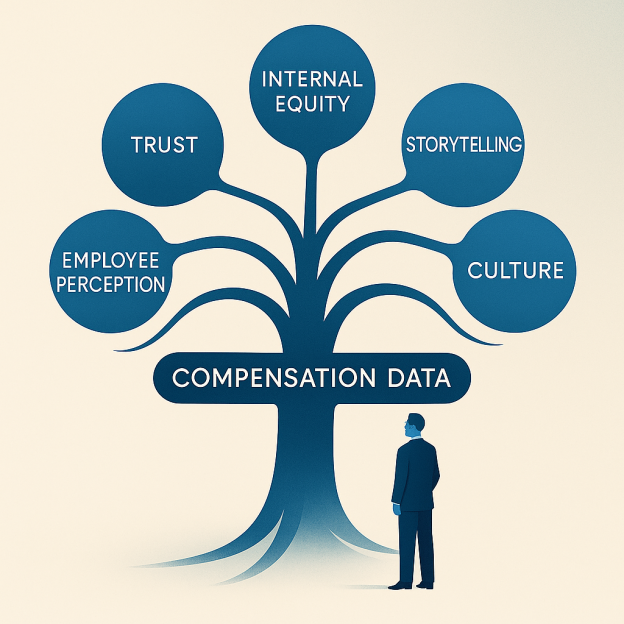
      • It can’t explain internal dynamics.
      • It can’t account for messy org charts.
      • It doesn’t always reflect your industry’s nuances.
      • It can’t predict how employees will feel.

      And most importantly, it can’t make the tough calls for you.

      What Data Doesn’t Show: 5 Blind Spots to Watch For

      1. Internal Equity vs. Market Reality

      Compensation data might tell you a role pays $120,000 in the market, but if you have three people doing similar work at $95,000 internally, matching the market could cause serious disruption.

      This is the balancing act between external competitiveness and internal equity – and data alone doesn’t resolve it. It takes strategic thinking to weigh what matters most for your organization: attraction, retention, morale, and fairness.

      1. The Real Scope of a Role

      Job titles can be very deceiving. A “Manager” in one company may oversee 50 people and a $10M budget, and manage no one at all in another.

      Compensation data benchmarks jobs based on job content, not titles – and job content can vary. When you’re market pricing a role, you need to know the true responsibilities, decision-making authority, and business impact without relying too much on the title.

      This is where human judgment comes in. You need to interpret the data based on context.

      1. The Intangibles of Pay Strategy

      Data can show you how much a role pays, but it can’t tell you how your compensation strategy aligns with your values. Do you lead or lag the market? Do you prioritize variable pay? Are you trying to drive performance, or create stability?

      These are philosophical questions that reflect your company’s culture, brand, and goals, and they can’t be answered by a fancy spreadsheet.

      1. Employee Perception

      Even the most rational pay decision can feel “unfair” if they aren’t communicated properly.

      Employees experience pay through emotion, not data. If someone feels underpaid compared to a peer or believes the company isn’t being transparent, that perception can hurt engagement regardless of what the market says.

      Data can justify decisions, but it can’t build trust. That takes storytelling, empathy, and clear communication.

      1. Future Readiness

      By nature, compensation data is backward-looking – it tells you what the market paid last year or last quarter. But in fast-moving industries like tech, your biggest hiring needs might be for roles that barely existed two years ago.

      To stay ahead, you need to combine data with foresight. What skills are gaining value? What trends are reshaping your industry? And how do you build pay structures that are agile enough to evolve?

      This kind of thinking goes beyond the numbers.

      Why Over-Relying on Data Is Risky

      Here’s what can happen when compensation professionals lean too hard on data:

      • Inflexible policies: Rigid adherence to pay bands or survey results can block smart exceptions.
      • Equity gaps: Data can reinforce existing disparities if you’re not actively auditing and adjusting.
      • Missed talent: You may underpay or overlook high-potential candidates because they don’t fit into your pricing model.
      • Damaged trust.: Overly technical explanations for pay decisions can alienate employees and erode culture.

      Ultimately, data is only as good as the strategy behind it. Without a thoughtful approach, even the best data can lead to poor outcomes.

      What to Do Instead: 5 Strategies to Think Beyond the Data

      1. Build Compensation Principles First

      Before diving into surveys, define your compensation philosophy. What do you believe about pay? What behaviors do you want to reward? Are you more focused on attracting top talent or retaining existing employees?

      Once you have clear principles, your use of data becomes more intentional, and far more effective.

      1. Pair Data with Storytelling

      Use data to inform your decisions, but use narrative to explain them. When employees understand the real reasons behind a pay range or promotion decision, they’re more likely to trust the outcome.

      Train managers to have these conversations – don’t let data do all the talking.

      1. Use Multiple Sources

      Relying on a single salary survey can limit your perspective. Try triangulating data from multiple sources like surveys, internal data, recruiter insights, and industry reports to get a more complete view.

      Think of it like cross-checking. The more context you have, the better your decisions will be.

      1. Evaluate Skills, Not Just Roles

      As roles become more fluid, skills-based compensation becomes more relevant. Ask yourself:

      • What skills are critical to our business right now?
      • Are we paying a premium for those?
      • Are we developing them internally?

      Skills-based pay frameworks allow for much more precision and agility.

      1. Stay Curious

      Numbers might tell you what’s happening, but curiosity tells you why.

      Ask questions when something looks off, dig deeper when the data doesn’t match your instincts, and always keep learning from peers, trends, and your own organization.

      Compensation is a data-driven field – but the best compensation professionals aren’t just spreadsheet masters, they’re strategic thinkers, communicators, and problem-solvers. They know how to interpret the numbers, and when to look past them.

      At the Compensation Analyst Academy, we help you develop both sides of the equation: analytical skills and strategic thinking. Because in this field, success doesn’t come from what the data says, but what you do with it.

      Interested in improving your compensation skills? We just added a new CAA training course starting August 5 to help you gain the knowledge, tools, and real-world perspective to think and act beyond the data – all while earning a career-boosting certification in just three days without taking an exam. Register here.

      The Unwritten Rules of Compensation

      Most compensation professionals are well-versed in the typical, formal structures: pay bands, market pricing, job leveling, and compliance. But beyond the frameworks and formulas lies a more nuanced reality governed by context, communication, and quiet judgment calls. These are the unwritten rules of compensation, and they often make the difference between a good comp analyst and a trusted advisor.

      Whether you’re early in your compensation journey or years into the field, understanding these subtle dynamics can sharpen your instincts and elevate your effectiveness. Below are some of the most important unwritten rules every compensation professional should know.

      Context is Key

      In theory, compensation work sounds precise – data-driven, objective, and formulaic. But in practice, everything depends on context. A salary survey may say one thing, but a fast-growing startup with aggressive hiring needs might decide another. Internal equity might conflict with market data, or policies that seem clear might require exceptions to make way for something more fair.

      One of the first unwritten rules of compensation is that you must read the room – organizationally, culturally, and economically. Your recommendations should reflect not just numbers, but the environment in which those numbers live.

      Data Isn’t Always Enough

      You can have the most accurate data in the world, but if the business doesn’t trust you or understand how to interpret the data, it won’t matter. Compensation professionals spend just as much time building credibility as they do building spreadsheets. Knowing how to communicate, influence, and frame data in a way that resonates with stakeholders is an essential part of the job.

      In reality, pay decisions are never just about data. They’re about people, perception, and priorities. The best comp professionals know when to zoom in on precision and when to step back and focus on the bigger picture.

      Policies are Interpreted, Not Just Enforced

      Every company has compensation policies – salary ranges, pay increase guidelines, and promotion frameworks. But even the most clearly written policies are subject to interpretation which often falls on you.

      This means you need to understand the intent behind the rules. Why was this policy created? What problem is it solving? What values does it reflect? By understanding the “why,” you’re better positioned to guide exceptions, answer challenges, and protect both fairness and flexibility.

      You’re a Translator, Not Just a Technician

      One of the biggest surprises for many new compensation professionals is how much of the job involves translation. You’re translating market data into internal strategy, business goals into pay programs, and HR concerns into executive-ready recommendations.

      Being a great translator requires empathy, clarity, and business fluency. You must understand the different perspectives in the room, and tailor your message accordingly. The ability to speak both “HR” and “finance” can set you apart more than any technical skill.

      Fair Isn’t Always Equal, and Equal Isn’t Always Fair

      This is one of the most difficult and delicate truths in compensation. It’s tempting to aim for perfect parity, but pay decisions are often influenced by a range of variables: experience, performance, geography, budget, negotiation, and much more. Sometimes what’s equitable doesn’t look equal, and efforts to treat everyone the same result in unintended consequences. For example, if everyone gets a 3% raise across the board, existing gaps in pay will simply be preserved, not fixed – so morale and retention will continue to suffer. Fairness means knowing when some need more to make things right.

      The unwritten rule? Strive for fairness, consistency, and transparency while considering that absolute uniformity may not always be achievable, or even desirable. The goal is thoughtful judgment, not rigid formulas.

      People Remember How Pay Decisions Made Them Feel

      Employees won’t always remember the exact number on their offer letter, but they will remember whether the offer felt respectful. They’ll remember if they were blindsided during a promotion cycle, or if pay decisions seemed secretive or inconsistent.

      Compensation professionals often sit behind the scenes, but the work you do shapes people’s perception of their value and their trust in the organization. The best comp pros never forget that every spreadsheet has a human on the other side.

      Don’t Let Perfection Block Progress

      Many early-career compensation professionals feel immense pressure to get every calculation exactly right before making a recommendation. While precision matters, so does momentum. Sometimes, waiting for the perfect dataset or the ideal model can delay necessary action.

      Compensation work lives in a world of ambiguity. There will always be gaps in the data, competing priorities, or exceptions that don’t fit the model. Part of the job is learning to make informed decisions with the best information available while being transparent about limitations.

      Executive Buy-in Matters

      Even the most well-designed compensation programs will stall if they lack executive support. Gaining leadership buy-in isn’t just about showing ROI, it’s about understanding what matters most to leaders and aligning your message with their priorities.

      This often means framing compensation not just as a cost, but as a driver of retention, performance, and culture. It means anticipating objections, speaking their language, and showing how your work supports broader goals. You don’t need to be in the C-suite to think like a business leader.

      Compensation Is a Long Game

      It’s easy to get caught up in the urgency of requests – someone wants a raise approved, a hiring manager needs a title created, an equity grant has to be processed. But the strongest compensation professionals think in systems, not just tasks.

      Every decision you influence contributes to a larger pattern. Are you reinforcing a culture of pay equity? Are you supporting scalable growth? Are you balancing short-term needs with long-term structure? Compensation isn’t just about today’s numbers, it’s about tomorrow’s stability.

      There’s Always More to Learn

      Finally, one of the most important unwritten rules is that this field is constantly evolving. Regulations shift, market data changes, and employee expectations grow – what worked three years ago might not work now. Great compensation professionals never stop learning – not just about pay, but about business, people, and strategy.

      That’s why communities like the Compensation Analyst Academy are so vital to the field – training, resources, and peer exchange help comp pros keep pace with the field and grow beyond the basics.

      Bringing the Rules to Life

      These unwritten rules may never appear in a handbook, but they are lived every day in the conversations, decisions, and dilemmas faced by compensation professionals. They aren’t static truths; they evolve with your career, your company, and the world around you.

      If you’re looking to sharpen your instincts, build confidence, and accelerate your growth, our next Compensation Analyst Academy course begins soon. Join us from May 13-15 to learn not just the rules, but the real-world strategies that bring them to life – while earning a career-boosting certification in the process.

      Wage Growth in 2025 So Far: What Compensation Pros Need to Know

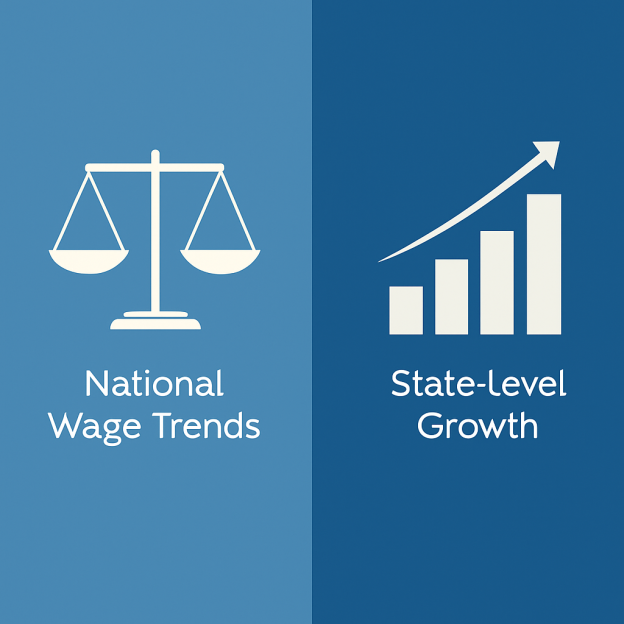
      The first quarter of 2025 brought a mix of stability and surprise in wage trends across the country. While national data shows steady growth, regional variations are driving some of the most interesting compensation developments this year. For professionals in compensation and HR, the message is clear: it is absolutely essential to stay informed and flexible while always being ready to adapt.

      For this week’s post, we’ll break down the latest government and private sector wage data, highlight the states with the fastest pay growth, and share insights on how compensation professionals can stay ahead – plus a resource that can help you get there faster.

      National Compensation Trends: A Look at Q1 2025

      The Bureau of Labor Statistics’ Employment Cost Index (ECI) report, released on April 30, 2025, paints a picture of modest but consistent wage and benefit growth:

      • Wages and salaries rose by 0.8% in Q1 2025.
      • Benefit costs increased by 1.2% for the same period.
      • Over the past 12 months, compensation costs rose by 3.4%, compared to 4.1% the previous year.
      • Inflation-adjusted wages increased by 1% year over year.

      This slowdown isn’t unexpected. As employers remain cautious amid economic uncertainty, pay strategies are holding steady. Factors like shifting trade and immigration policies, volatile markets, and declining worker optimism have many organizations feeling unsure of what’s to come.

      However, compensation professionals know that even during periods of broad-level steadiness, deeper shifts are always underway – and the most interesting developments often emerge when you zoom in on local dynamics.

      State-Level Surprises: Where Pay is Growing Fastest

      While national wage growth hovers around the 4.6% mark for job stayers (per ADP’s March 2025 data), some states are leaving that average far behind. According to ADP’s Pay Insights Report, six states are leading the way with significant pay bumps:

      1. Idaho – 6.2% annual pay growth
      2. Wyoming – 6.0%
      3. Alaska – 5.6%
      4. Oregon – 5.5%
      5. Montana – 5.4%
      6. Nevada – 5.4%

      These states share a few common traits: rising employment rates, relatively lower costs of living, and growth in industries like energy, logistics, and outdoor recreation. In contrast to coastal hubs where pay has plateaued or slowed, these states are benefiting from new business investments and shifting workforce dynamics.

      For comp pros, this underscores the importance of staying aware of regional trends. It’s no longer enough to track national averages – local labor markets may demand sharper, faster responses, especially if your organization operates across multiple states or recruits remotely.

      What These Trends Mean for Compensation Professionals

      The current compensation landscape presents three key takeaways:

      1. Steady Is Not Static

      While national figures suggest consistency, professionals must avoid complacency. Compensation strategy must still account for inflation, cost-of-living adjustments, and changing employee expectations.

      1. Geography Matters

      The days of relying solely on big-city benchmarks are behind us. Regional data, especially from high-growth states, should influence pay structure decisions, particularly in competitive or expanding markets.

      1. Future-Focused Planning is Crucial

      As SHRM’s research points out, employers are grappling with uncertainty around policy, inflation, and the political climate. Compensation professionals need to be more agile than ever in planning ranges, total rewards strategies, and internal communications.

      If your organization is grappling with how to respond to these shifting trends – especially across multiple regions – it may be time to bring in outside expertise. Our partners at the Compensation and HR Group (CHRG) work directly with organizations to assess compensation strategy, align pay structures, and design solutions tailored to evolving labor market realities. Contact them here for expert assistance.

      How to Prepare: Upskilling with the Compensation Analyst Academy

      With so many moving pieces, how can compensation professionals stay ahead?

      One of the most effective steps is investing in your own development. The Compensation Analyst Academy (CAA) is designed specifically for professionals who want to deepen their skills in a fast-paced, practical environment.

      The next virtual session will take place from May 13-15, offering:

      • Live online instruction from experienced compensation leaders
      • A comprehensive toolkit for evaluating pay ranges, job structures, and equity
      • A career-boosting certification as a Certified Compensation Analyst (CCA) with no exam required

      In less than a week, you’ll walk away with stronger compensation instincts, hands-on tools, and a credential that sets you apart in your organization and the broader job market.

      Wage growth in 2025 so far has been a tale of two realities: one of steady national trends, and another of rapid regional shifts. For compensation professionals, this is both a challenge and an opportunity.

      Understanding where growth is happening and why can help you shape smarter, more responsive compensation strategies. And with the right training, you’ll be ready to lead the way.

      What Makes a Great Compensation Professional?

      The world of compensation is complex, constantly changing, and increasingly vital to business strategy. As organizations strive to attract, retain, and motivate talent in a competitive labor market, the role of the Compensation Professional has never been more critical. But what separates a good comp pro from a great one?

      Whether you’re just starting out in the field or have been navigating salary structures and pay bands for years, the qualities that define excellence in compensation go beyond crunching numbers. In this post, we’ll explore the traits, skills, and mindset that make a Compensation Professional truly stand out, and why building a strong foundation (and getting certified) can make all the difference.

      1. Mastering the Fundamentals

      At its core, compensation is both an art and a science. The “science” part includes understanding base pay structures, incentive plans, job evaluations, market pricing, and compliance requirements. The “art” aspect comes into play when you apply that knowledge strategically to meet the unique needs of your organization.

      A great compensation professional doesn’t just know the definitions, they know how to apply them in real-world contexts. They can explain the difference between exempt and non-exempt classifications, analyze internal equity issues, and recommend data-backed solutions with confidence.

      Unfortunately, many professionals enter comp roles with little formal training. They “learn on the job,” picking up bits and pieces from colleagues or past projects. While that experience can be valuable, gaps in knowledge can lead to costly mistakes like misclassifying roles, mishandling pay equity audits, or relying on outdated market data.

      Building a strong foundation is the first step toward being a trusted compensation partner. It’s also where structured training and certification come in.

      2. Becoming Fluent in Market Data

      You can’t price jobs accurately or guide pay decisions confidently without understanding how to read and interpret market data. Great Compensation Professionals know how to:

      • Select appropriate survey sources
      • Match internal roles to survey benchmarks
      • Interpret data cuts (e.g., by industry, region, or company size)
      • Spot anomalies or outdated benchmarks
      • Adjust recommendations based on organizational context

      This fluency helps organizations avoid common pitfalls, like relying on estimates from online salary calculators or assuming a one-size-fits-all national average will suffice.

      It also builds credibility. When you walk into a meeting with a solid data story, leaders listen. When you back up pay decisions with facts and explain your reasoning clearly, you become indispensable.

      3. Thinking Strategically, Acting Practically

      Compensation Professionals don’t just administer pay; they shape strategy. A great comp pro understands how pay influences behavior and how compensation ties into broader HR and business goals.

      They ask big-picture questions:

      • How can our pay structures support career growth?
      • Are we aligning compensation with performance and results?
      • Is our incentive plan actually driving the outcomes we care about?
      • How do we balance transparency, equity, and flexibility?

      But, they also sweat the details. They know that an error in a spreadsheet, a misstep in communication, or a misinterpretation of a job’s scope can derail even the most well-intentioned strategy.

      4. Communicating with Confidence

      Data is only as powerful as your ability to communicate it. Great Compensation Professionals are clear, concise, and confident communicators. They can explain complex pay structures to managers, coach HR partners through job-leveling discussions, and create executive-ready reports that drive decision-making.

      This communication skill is especially important in today’s pay transparency environment. With new regulations and shifting employee expectations, compensation teams are being called on more frequently to speak up and speak clearly about how pay works and why.

      If you can demystify compensation without dumbing it down, you become a bridge between leadership and the workforce.

      5. Staying Current in a Rapidly Changing Field

      The world of compensation is always changing with new pay transparency laws, shifts toward skills-based pay, emerging technology and AI in compensation planning, remote work and global talent pools, and more.

      Great professionals commit to continuous learning. They attend training programs, subscribe to newsletters, read industry blogs, and join professional groups. Most importantly, they recognize when it’s time to upgrade their skills and take action.

      If you’re ready to take that next step, the Compensation Analyst Academy’s May 13th–15th training course is a great place to start. This fully virtual, three-day course offers practical, hands-on instruction from an experienced instructor – no exam required. Upon completion, you’ll receive your Certified Compensation Analyst (CCA) designation and join a growing network of professionals who are serious about their impact. Learn more and register here.

      6. Earning Trust and Building Influence

      At the end of the day, Compensation Professionals succeed not just because of what they know, but because of how they show up. They are trusted advisors, not number crunchers who work behind the scenes. They take accountability, protect fairness, and build processes that earn the confidence of employees and executives alike.

      Trust is built through consistency, clarity, and competence. Certification is one of many ways to signal that competence, and for many professionals, it’s also the boost that helps them move from behind the spreadsheet to a seat at the strategy table.

      The Compensation Analyst Academy is the only training program where you can earn a certification in three days without taking a test – and there’s no need for recertification. So don’t miss out – we’d love to see you at our May 13th class!

      Grow Your Compensation Career with Intention

      If you’re in compensation, you’re in a position to make a lasting impact on your organization. Great Compensation Professionals don’t just plug in numbers, they shape experiences, drive equity, and support strategic growth. And like any profession worth doing, it takes skill, training, and a commitment to excellence.